
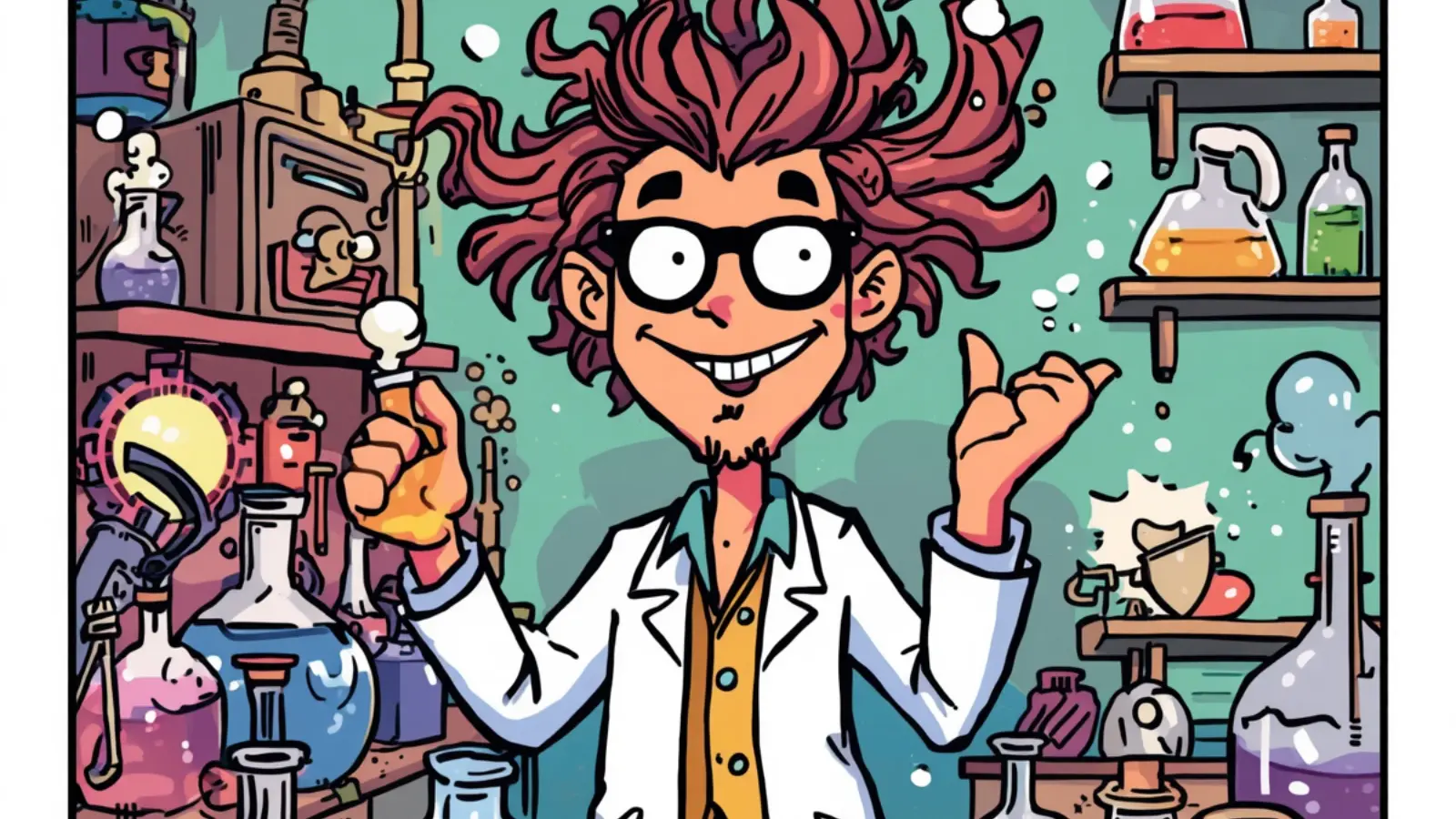
Science is often seen as serious white lab coats, complex equations, and intense discoveries.
But behind every formula and experiment lies something surprisingly human: laughter. Yes, even atoms, galaxies, and DNA strands can inspire humor.
The world of jokes in science is where curiosity meets comedy, and where learning suddenly feels lighter, brighter, and way more fun.
Think about it what if electrons had moods? What if black holes had a sense of humor? What if your biology teacher secretly used jokes to make cell division unforgettable? Science isn’t just about answers; it’s also about the joy of asking questions in a playful way.
So let’s dive deep into the universe of witty discoveries, nerdy punchlines, and educational humor that makes science feel less like a subject and more like a celebration.
Atomic Giggles: how jokes in science make chemistry feel alive

- ⚛️ Atoms bonding like they’re at a party—chemistry jokes explain reactions in fun ways
- 😂 Electrons “jumping levels” like kids skipping school
- 🧪 Lab explosions turned into punchlines instead of panic
- 💥 “I lost an electron… are you positive?” classic chemistry humor
- 🧠 Makes molecular bonding easier to remember through laughter
- 🔬 Scientists using jokes to explain complex reactions
- 🧫 Funny isotope comparisons that simplify learning
- ⚡ Energy transfer jokes that stick in memory
- 🧊 Ice-breaking humor in chemical bonding lessons
- 🧬 Makes periodic table less intimidating
- 🧪 Humor reduces fear of lab mistakes
- 😄 Students recall reactions better with jokes
- 📚 Chemistry becomes storytelling, not memorization
- 🎯 Builds curiosity-driven learning environment
Physics of Funny Moments: understanding jokes in science through motion and energy
- 🚀 “Why did the object go to therapy? Too much inertia!”
- ⚖️ Gravity jokes make falling objects memorable
- 💨 Speed vs velocity explained through humor
- 🔋 Energy conservation turned into funny life analogies
- 🪐 Newton’s laws become relatable through jokes
- ⏱️ Time dilation jokes in simple terms
- 🎢 Roller coaster physics explained with laughter
- ⚡ Electricity humor simplifies circuits
- 🧲 Magnetism jokes create strong mental images
- 🌍 Earth motion jokes make astronomy fun
- 📡 Wave physics explained with sound humor
- 🧊 Temperature and heat jokes improve recall
- 🎯 Makes formulas less intimidating
- 😄 Encourages curiosity in physics classrooms
Biology Banter: jokes in science hidden inside living cells
- 🧬 DNA “unzipping like a drama scene”
- 🦠 Bacteria jokes making microbiology less scary
- 🫀 Heart beating like it’s nervous before a date
- 🌱 Plants “talking” through funny analogies
- 🧠 Brain humor explaining neurons firing
- 🐒 Evolution jokes that make sense of complexity
- 🦴 Skeleton jokes for anatomy fun
- 🧫 Cell division like copying homework
- 🧬 Genetic mutation turned into funny storytelling
- 🐛 Worm biology jokes for engagement
- 🧪 Enzyme humor for digestion lessons
- 🐠 Marine biology jokes for ecosystems
- 🦋 Life cycle humor for memorization
- 😄 Makes biology feel alive and relatable
Cosmic Comedy: jokes in science across galaxies and space-time
- 🌌 Black holes “eating everything like hungry teens”
- 🚀 Astronaut jokes about floating problems
- 🌠 Shooting stars making wish jokes
- 🪐 Planet personalities explained humorously
- 🌞 Sun being “too hot-headed”
- 🌙 Moon phases like mood swings
- 🛸 Aliens used in theoretical humor
- ⏳ Time-space jokes simplify relativity
- 🌍 Earth’s rotation as “daily spin cycle”
- 💫 Comets as cosmic messengers
- 🌌 Galaxy jokes for imagination expansion
- 🔭 Telescope humor in discovery learning
- 🚀 Rocket science made less intimidating
- 😄 Universe feels friendlier through humor
Lab Life Humor: everyday jokes in science from real experiments
- 🧪 “Oops” moments in experiments turned funny
- 🔥 Bunsen burner jokes in classroom labs
- 🧫 Spill accidents made relatable
- 📊 Data collection humor in reports
- 🧪 Mixing chemicals like cooking recipes
- 😅 Failed experiments turned into lessons
- 🧤 Safety goggles “fashion statements”
- 🧬 Lab partner chaos jokes
- 📚 Teachers using humor for engagement
- 🧪 Measurement errors turned lighthearted
- ⚗️ Chemical smell jokes in labs
- 🧫 Petri dish humor for microbiology
- 🔬 Microscope discoveries as surprises
- 😄 Makes labs less stressful and more fun
Periodic Table Punchlines: jokes in science inside elements and reactions
- 🧪 “I’m noble, I don’t react” jokes for gases
- ⚛️ Hydrogen being “first but basic”
- 🔥 Oxygen always supporting combustion drama
- 🧲 Iron jokes about strength
- 💎 Carbon as “life’s building block influencer”
- 🧂 Sodium and chlorine relationship humor
- ⚡ Metals vs non-metals rivalry jokes
- 🧪 Element personalities explained creatively
- 📊 Atomic number jokes for memory
- 🧬 Reaction chain humor
- 🧪 Periodic trends turned into stories
- 😄 Makes memorization easier
- 📚 Chemistry becomes entertaining
- 🎯 Enhances recall through storytelling
Neuroscience Nonsense: how jokes in science tickle the brain
- 🧠 Brain “lagging like old Wi-Fi” humor
- ⚡ Neurons firing like gossip chains
- 🧬 Memory jokes improving retention
- 😴 Sleep brain humor explained simply
- 🧠 Left vs right brain jokes
- 🧪 Dopamine explained through happiness jokes
- 🔄 Brain plasticity made funny
- 🧠 Thoughts “buffering” like videos
- 🧬 Synapse jokes for learning
- 😄 Humor improves cognitive engagement
- 🧠 Attention span jokes in classrooms
- 📚 Makes psychology easier to understand
- 🎯 Enhances focus through laughter
- 💡 Brain loves humor-based learning
Quantum Quirks: strange jokes in science at particle level
- ⚛️ “Schrödinger’s cat is both funny and serious”
- 🧪 Particles behaving unpredictably like teenagers
- 🌌 Quantum entanglement relationship jokes
- ⚡ Energy states humor simplified
- 🧬 Uncertainty principle jokes
- 🧲 Electron “ghosting” analogy
- 🔬 Wave-particle duality humor
- 🧪 Quantum tunneling like magic tricks
- 🧠 Probability jokes in physics
- 🌌 Multiverse humor ideas
- ⚛️ Physics confusion made funny
- 😄 Makes abstract science relatable
- 📚 Encourages curiosity
- 🎯 Turns complexity into storytelling
Environmental Wit: eco-friendly jokes in science and nature
- 🌳 Trees “talking” through roots humor
- 🌍 Earth climate mood swings jokes
- 🌊 Ocean waves gossiping metaphor
- 🌿 Plants competing for sunlight like influencers
- 🐝 Bees as “busy workers” jokes
- 🌧️ Rain cycles explained humorously
- 🌡️ Global warming jokes simplified
- 🐢 Slow animals vs fast humans humor
- 🌱 Composting turned into funny storytelling
- 🦋 Ecosystem balance jokes
- 🌾 Farming science humor
- 😄 Makes ecology engaging
- 📚 Promotes environmental awareness
- 🎯 Learning sustainability through laughter
Medical Humor: healing laughs through jokes in science and anatomy
- 🫀 Heart “falling in love literally” jokes
- 💊 Medicine working like magic humor
- 🧠 Brain doctors vs brain confusion jokes
- 🦴 Bone jokes for anatomy learning
- 🧬 DNA as “instruction manual” humor
- 🩺 Doctors using humor for comfort
- 🦠 Germ jokes for hygiene awareness
- 💉 Vaccination humor simplified
- 🫁 Breathing jokes for lungs
- 🧪 Blood type humor
- 🏥 Hospital life jokes
- 😄 Reduces fear of medical topics
- 📚 Improves memory retention
- 🎯 Makes anatomy approachable
Engineering Humor Grid: structural jokes in science and machines
- 🏗️ Bridges “complaining under pressure” jokes
- ⚙️ Machines acting like humans humor
- 🔩 Screw and bolt relationship jokes
- 🏭 Factory automation humor
- 🚗 Car engine jokes simplified
- 🧱 Construction site comedy
- ⚡ Electrical engineering humor
- 🧰 Tool personalities jokes
- 🛠️ Fixing mistakes humorously
- 📐 Design flaws turned funny
- 🏗️ Structural load jokes
- 😄 Makes engineering relatable
- 📚 Improves technical understanding
- 🎯 Encourages creative thinking
Chemistry of Emotions: how jokes in science bond people together
- ❤️ Emotional bonding explained like chemical bonding
- 🧪 Attraction like molecular forces
- 😂 Humor releases “social energy”
- 💬 Conversations as reaction mixtures
- 🧠 Shared laughter builds memory bonds
- 💞 Relationships like stable compounds
- 🔥 Chemistry between people jokes
- 🧬 Emotional reactions simplified
- 😄 Laughter as universal reaction
- 🧪 Friendship chemistry explained
- 💡 Humor builds connection
- 📚 Social science made easy
- 🎯 Strengthens communication
- ❤️ Science meets human emotion
Space-Time Humor Lab: jokes in science from relativity and beyond
- ⏳ Time “moving slow on Mondays” relativity joke
- 🚀 Speed affecting time humor
- 🌌 Space bending like rubber sheet analogy
- 🪐 Gravity warping reality jokes
- ⏱️ Time travel humor ideas
- 🌠 Light speed jokes simplified
- 🧠 Einstein’s hair humor (classic meme science)
- 🌍 Orbit timing jokes
- 🚀 Astronaut aging slower humor
- 🔭 Telescope discovery jokes
- 🌌 Universe expansion humor
- 😄 Complex physics made fun
- 📚 Relativity simplified
- 🎯 Sparks imagination in learners
Future Tech Giggles: AI-driven jokes in science for tomorrow
- 🤖 AI “learning humor from humans” jokes
- 💻 Robots telling dad jokes
- 📱 Smart devices being “too smart” humor
- 🧠 Machine learning confusion jokes
- ⚙️ Automation replacing homework humor
- 🔌 Tech glitches turned funny
- 🛰️ Future space tech jokes
- 🧬 Biotechnology humor evolution
- 💡 Innovation mistakes turned learning
- 🤖 AI emotional intelligence jokes
- 📡 Connectivity humor in future world
- 😄 Technology made friendly
- 📚 Science meets digital humor
- 🎯 Future learning becomes playful
FAQ: Jokes in Science (SEO Optimized Answers)
1. What are jokes in science and why are they important?
Jokes in science are humorous explanations of scientific concepts using relatable analogies, wordplay, or storytelling. They are important because they simplify complex topics like physics, chemistry, and biology, making them easier to understand and remember. Humor activates emotional memory, helping students retain information longer while also reducing stress and anxiety around difficult subjects.
2. How do jokes in science help students learn better?
Science jokes improve learning by increasing engagement and attention. When students laugh, their brain releases dopamine, which enhances memory retention. Complex formulas or theories become easier to understand when explained through humor. For example, physics laws or chemical reactions become memorable stories rather than abstract concepts.
3. Can jokes in science improve exam performance?
Yes, indirectly. While jokes themselves are not study material, they help students understand and recall concepts more effectively. By associating humor with topics like the periodic table or Newton’s laws, students can recall answers faster during exams. This makes revision more enjoyable and less stressful.
4. What are some examples of jokes in science for chemistry?
Examples include jokes like “I lost an electron, are you positive?” or atoms bonding like they’re at a party. These jokes simplify chemistry concepts such as ions, bonding, and reactions, making them easier to visualize and remember in everyday learning.
5. Why do teachers use jokes in science classrooms?
Teachers use jokes to make lessons more engaging and less intimidating. Humor helps break the monotony of lectures, improves student participation, and creates a positive classroom environment. It also helps explain difficult topics in a more relatable way.
6. Are jokes in science useful for kids?
Absolutely. Kids learn better through storytelling and humor. Science jokes introduce them to complex topics like space, biology, or physics in a fun, non-threatening way. This builds curiosity and encourages long-term interest in science.
7. What is the role of humor in scientific thinking?
Humor encourages creative thinking, which is essential in science. Many discoveries come from thinking outside the box. Jokes in science help students see patterns, question assumptions, and explore ideas in a playful, imaginative way.
8. Can jokes in science make hard subjects easier?
Yes. Subjects like quantum physics, organic chemistry, or genetics can feel overwhelming. Humor breaks down these barriers by turning abstract ideas into relatable stories or analogies, making learning more approachable.
9. Where can I find more jokes in science?
You can find them in educational blogs, science teachers’ resources, YouTube educational channels, and social media pages focused on STEM humor. Many textbooks also include light jokes to make chapters more engaging.
10. Do science jokes actually help memory retention?
Yes. Neuroscience shows that humor triggers emotional responses in the brain, which strengthens memory encoding. This means students are more likely to remember humorous explanations compared to plain text.
Conclusion: The Joy of Jokes in Science
Science is not just equations, formulas, or lab coats it is a living, breathing story full of wonder and laughter.
The world of jokes in science proves that even the most complex ideas can become simple, relatable, and deeply enjoyable when mixed with humor.
When we laugh while learning, we don’t just understand science we feel it, remember it, and connect with it on a human level.

“Read funny stories, prank ideas, and viral humor articles written by comedy enthusiast Mason Carter.”